
Building Construction Deaths Rising in New York
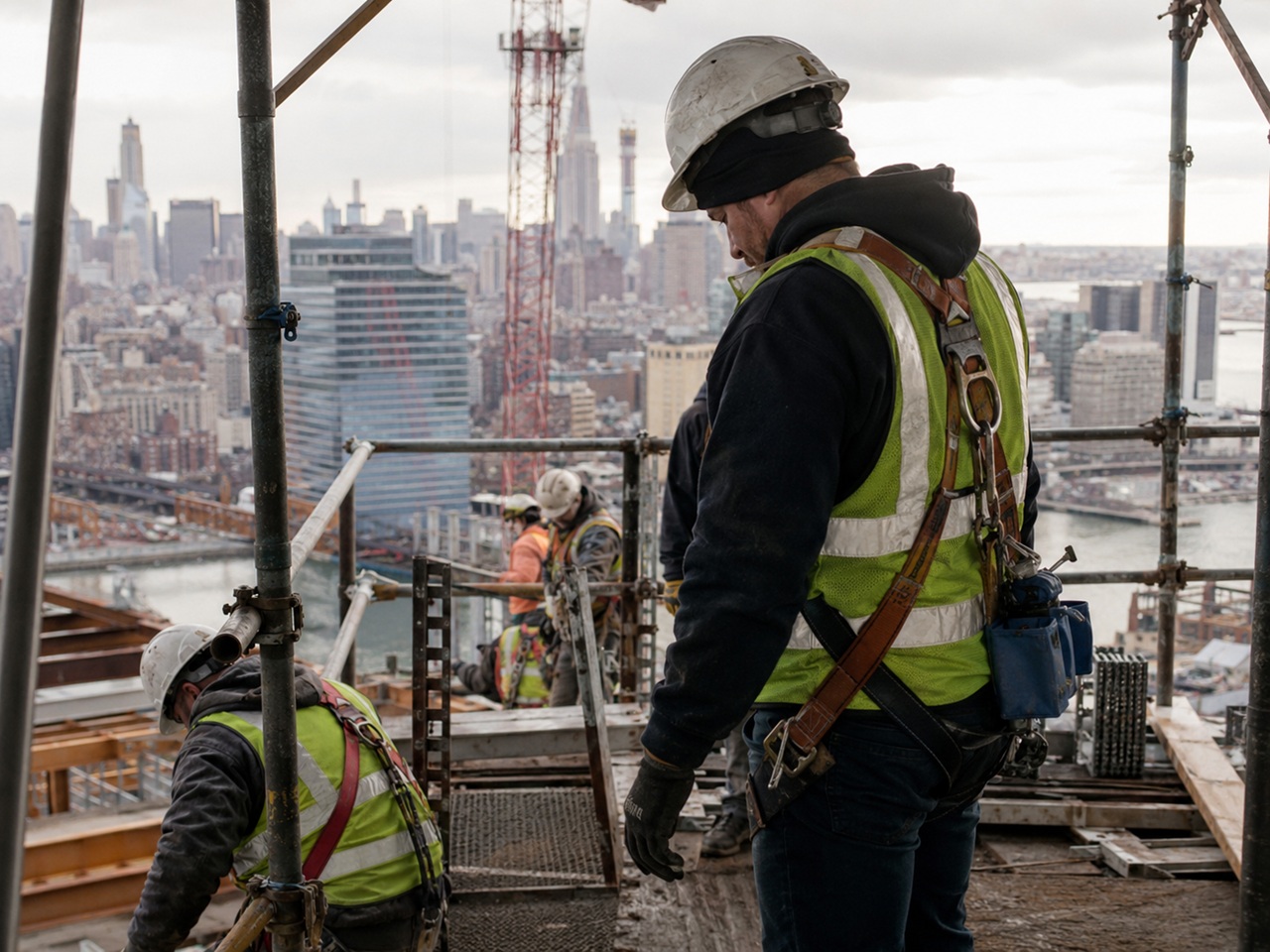
Spike in Construction Deaths Shows Why New York Workers Need Strong Legal Protection
Building construction fatalities climbed 54.9 percent nationwide over a 13-year period, rising from 142 deaths in 2012 to 220 in 2024, according to a new data bulletin from CPWR, The Center for Construction Research and Training, reported by Safety+Health Magazine. The fatality rate for workers in that subsector also rose, increasing from 11.4 deaths per 100,000 workers to 11.9.
The most troubling part is the contrast. Nonfatal injury rates in building construction fell over the same general period, dropping to 81.1 per 100,000 workers in 2023-2024 from 119.7 in 2011-2012. In other words, construction workers are being hurt less often on paper, but more workers are dying when something goes wrong.
Our New York City construction accident attorneys at Pasternack Tilker Ziegler Walsh Stanton & Romano, LLP have spent more than 90 years fighting for injured workers and their families. When a construction worker is seriously hurt or killed, the legal path may involve workers’ compensation, third-party claims, New York Labor Law claims, or all of them at once. The numbers are national, but the risk is very real on New York job sites.
What Does The New CPWR Data Show?
The CPWR data bulletin, based on U.S. Bureau of Labor Statistics data, breaks construction fatalities down by subsector. Building construction, which includes residential and commercial building projects, saw the steepest increase in fatality rate among the three construction subsectors tracked.
Specialty trade contractors, including electricians, plumbers, roofers, and other tradespeople working on construction projects, recorded 608 deaths in 2024, up from 495 in 2013. But the fatality rate for that subsector decreased, falling from 13.4 per 100,000 workers in 2012 and 2013 to 11.7 per 100,000 workers in 2024.
Heavy and civil engineering construction saw the sharpest improvement. Its fatality rate fell from 25 per 100,000 workers in 2012 to 16.1 per 100,000 workers in 2024.
Those differences matter because “construction” is not one single work environment. A high-rise building project in Manhattan, a roadwork project in Queens, a demolition site in Brooklyn, and a specialty trade job in the Bronx can involve different hazards, different contractors, and different legal issues after an accident.
Why Are Injury Rates Falling While Death Rates Climb?
On paper, construction safety appears to be improving. Nonfatal injury rates fell across every subsector CPWR tracked. Specialty trade contractors saw their injury rate drop from 142.7 per 100,000 workers in 2011-2012 to 96.5 per 100,000 workers in 2023-2024. Heavy and civil engineering construction also saw its nonfatal injury rate fall.
But a lower injury rate did not produce a lower death rate in building construction. That gap deserves attention. It may mean fewer minor incidents are being reported or occurring, while the incidents that do happen are more likely to involve catastrophic forces, such as falls from heights, struck-by accidents, equipment failures, collapses, or exposure to dangerous energy sources.
It may also reflect underreporting. Some workers may not report injuries because they fear retaliation, losing hours, being removed from the job, or being blamed for the accident. When injuries are not reported, the statistics may make job sites look safer than they really are.
That is why injured workers should take reporting seriously. Incident reports can be used against injured workers in NYC, but failing to document what happened can also make it harder to prove the claim later. The key is making sure the report is accurate, complete, and consistent with the medical evidence.
How Do National Trends Compare To New York City’s Numbers?
New York City’s construction fatality numbers moved in the opposite direction recently. According to New York Committee for Occupational Safety and Health data reported earlier this year, 19 construction workers died on New York City job sites in 2024, down from 30 the year before.
That single-year drop is encouraging, but it does not erase the longer pattern. Between 2015 and 2024, at least 218 construction workers died on the job in New York City alone. Even when local deaths fall in one year, construction remains one of the most dangerous industries in the city.
For workers and families in New York, the lesson from both data sets is the same. A serious construction accident can change everything in seconds, and injury statistics alone do not tell the full story. A worker may still need surgery, long-term medical care, wage replacement, permanent disability benefits, or a lawsuit against someone other than the employer.
What Are The Fatal Four Causes Of Construction Deaths?
Many construction deaths trace back to the same major hazards, often called the Fatal Four. These dangers appear across job sites nationwide and are especially relevant in New York City, where workers routinely perform tasks at heights, near heavy equipment, around energized systems, and in crowded work zones.
- Falls: Falls from scaffolds, ladders, roofs, floor openings, temporary stairs, elevated platforms, and unprotected edges remain one of the deadliest construction hazards.
- Struck-By Accidents: Workers can be struck by falling tools or materials, suspended loads, vehicles, cranes, forklifts, or other moving equipment.
- Electrocution: Contact with power lines, exposed wiring, energized equipment, extension cords, or temporary electrical systems can cause fatal injuries.
- Caught-In or Caught-Between Accidents: Workers can be trapped by collapsing trenches, moving machinery, rotating equipment, structural collapses, or vehicles pinned against fixed objects.
These hazards are rarely unavoidable. Proper training, fall protection, equipment maintenance, jobsite supervision, and enforcement of safety rules can prevent many fatal injuries. When those protections fail, the case may involve more than a standard workers’ compensation claim.
Why Are Falls Such A Major Risk On New York Construction Sites?
Falls are especially dangerous in New York because so much construction work happens at height. Workers may be on scaffolds, ladders, temporary stairways, roofs, hoists, suspended platforms, or unfinished floors. A missing guardrail, an unsecured ladder, a defective scaffold plank, or the absence of a harness can turn one misstep into a fatal accident.
New York’s Scaffold Law, Labor Law Section 240, can be central in gravity-related construction accident claims. The law applies to more than scaffolds. It can also apply when a worker falls from a height or is struck by a falling object because proper safety equipment was not provided.
Temporary access structures can also be dangerous. Workers moving between levels on temporary stairs, ramps, and platforms may face fall hazards when those structures are poorly built, poorly maintained, wet, unstable, or missing proper handrails. Serious injuries from temporary stairway and ramp accidents on NYC construction projects can raise both workers’ compensation and third-party liability issues.
How Do Struck-By And Electrocution Accidents Happen?
Struck-by accidents can happen when workers are hit by falling materials, swinging loads, moving equipment, vehicles, tools, or debris. These accidents are common on busy job sites where multiple trades are working at once and overhead hazards are not controlled.
Claims involving struck-by accidents on New York construction sites often depend on who controlled the work area, whether materials were properly secured, whether workers were kept out of danger zones, and whether contractors followed safety rules for moving equipment and overhead work.
Electrocution accidents can be just as devastating. Power lines, temporary wiring, damaged cords, energized equipment, and unsafe electrical setups can expose workers to fatal current. Construction sites change constantly, and electrical hazards can appear quickly when contractors cut corners or fail to coordinate trades.
When power line accidents occur on New York construction sites, the investigation may focus on equipment placement, crane or boom contact, utility marking, clearance distances, site planning, and whether workers were warned about energized hazards.
What Legal Options Do Injured Construction Workers Have In New York?
Workers hurt on a New York construction site often have more than one path to compensation. A workers’ compensation claim can cover medical expenses and a portion of lost wages regardless of who was at fault. If the worker has a permanent injury, additional benefits may be available depending on the body part, severity, and disability classification.
A third-party claim may also be available when someone other than the injured worker’s direct employer contributed to the accident. That can include a property owner, general contractor, subcontractor, architect, engineer, equipment manufacturer, vehicle operator, or another company on the site.
Third-party claims matter because workers’ compensation does not cover everything. A lawsuit against a negligent third party may allow recovery for pain and suffering, full lost earnings, future lost earning capacity, and other damages that workers’ compensation does not provide. That is why understanding workers’ compensation and third-party lawsuits in New York construction accidents is so important after a serious jobsite injury.
Who Can Be Sued After A Construction Accident?
In most cases, workers cannot sue their direct employer for ordinary negligence because workers’ compensation is the primary remedy against the employer. But that does not mean the worker has no lawsuit. Construction sites often involve many companies, and someone outside the worker’s direct employer may have contributed to the accident.
Potential third-party defendants may include property owners, general contractors, construction managers, subcontractors in other trades, equipment manufacturers, suppliers, delivery companies, and other parties whose negligence contributed to the injury.
Knowing who can be sued after a construction accident in New York requires a careful investigation into who controlled the work, who created the hazard, who had notice of the unsafe condition, and who had the authority to fix it.
New York Labor Law 200 can also be relevant in construction-site negligence claims. It generally addresses the duty to provide workers with a reasonably safe workplace. Claims involving New York Labor Law 200 and construction site negligence often turn on supervision, control, and notice of dangerous conditions.
What Evidence Should Injured Workers Save After A Construction Accident?
Construction accident evidence can disappear quickly. Debris gets cleared. Equipment gets moved. Scaffolds are taken down. Contractors correct hazards. Witnesses leave the jobsite. Safety documents may remain in the hands of companies already preparing a defense.
Important evidence may include:
- Photos and Videos: Images of the hazard, equipment, work area, lighting, weather, protective gear, and injuries can help prove what happened.
- Incident Reports: A written report can document the accident, but it should be accurate and complete before a worker signs it.
- Witness Information: Coworkers, foremen, subcontractors, delivery drivers, and others on-site may have witnessed the hazard or the accident.
- Medical Records: Prompt treatment links the injury to the jobsite accident and demonstrates the severity of the harm.
- Safety Records: Toolbox talks, inspection reports, OSHA records, job hazard analyses, and site safety plans may reveal whether the hazard was known.
- Equipment Records: Maintenance logs, inspection records, rental agreements, and manufacturer information may be relevant when machinery, scaffolds, ladders, hoists, or tools are involved.
Saving the right evidence after a construction accident in New York can make the difference between a disputed claim and a case that clearly shows how the accident happened. Early legal help can also prevent the other side from controlling the evidence before the worker or family knows what to ask for.
What Compensation Can Families Recover After A Fatal Construction Accident?
When a construction accident results in a worker’s death, families in New York may be entitled to several forms of compensation. The available benefits depend on the worker’s employment status, family relationships, earnings, the cause of the accident, and whether a third party contributed to the fatal incident.
Potential recovery may include:
- Workers’ Compensation Death Benefits: Eligible surviving family members may receive ongoing financial benefits after a fatal workplace accident.
- Funeral and Burial Expenses: Workers’ compensation death benefits may include payment toward funeral costs.
- Lost Income and Financial Support: A wrongful death claim may account for the earnings and support the worker would have provided.
- Third-Party Wrongful Death Damages: When a property owner, contractor, subcontractor, manufacturer, or another party contributed to the fatal accident, a separate lawsuit may recover damages workers’ compensation does not cover.
Families should not assume workers’ compensation is the only available path. Workers’ compensation death benefits can provide critical support, but a third-party wrongful death claim may also be necessary to hold all responsible parties accountable.
How Can an NYC Construction Accident Lawyer Help?
A serious or fatal construction accident can leave workers and families facing medical bills, lost income, disability, grief, and a legal process most people have no idea how to navigate alone. The sooner the case is investigated, the stronger the evidence may be.
Our New York City construction accident attorneys at Pasternack Tilker Ziegler Walsh Stanton & Romano, LLP know how these cases work because we have represented injured workers and their families for over 90 years. We pursue workers’ compensation, third-party, Scaffold Law, Labor Law 200, and wrongful death claims side by side when a case calls for it.
If you or someone you love was hurt or killed in a construction accident anywhere in New York City, contact us today for a free, confidential consultation.
"My experience with this law firm has been great. They are always helpful and knowledgeable in any matter and listening to all your concerns. Thank you so very much. I am very happy with all the support from everyone." - Samuel G., ⭐⭐⭐⭐⭐