
How AI and Smart Technology Are Being Used to Reduce Workplace Injuries
What Does Smart Manufacturing Mean For Worker Safety?
Manufacturing floors remain among the most dangerous workplaces in the United States. Despite safety training, regulations, and decades of industrial standards, thousands of workers are injured every year by machinery, repetitive tasks, falls, and environmental hazards.
In response, many employers are turning to artificial intelligence and smart manufacturing technologies to detect risks earlier and reduce preventable injuries, a development that our New York City workers' compensation lawyers now see referenced more frequently in workplace injury claims.
Recent injury statistics show a modest decline in reported manufacturing injuries, from nearly 397,000 cases in 2022 to about 356,000 in 2023. While those numbers still represent an unacceptably high level of harm, the shift has increased scrutiny of whether emerging technology is actually improving worker safety or simply changing how injuries are tracked after they occur.
Why Are Manufacturing Injuries So Common?
Production floors move fast, and hazards often develop in ways that are difficult for supervisors or coworkers to spot in real time.
Fatigue, repetitive motion, machine wear, environmental changes, and human error all compound risk. Even well-trained workers can be injured when conditions change quickly or when warnings come too late.
Federal data consistently shows that manufacturing injuries follow predictable patterns tied to the physical demands of the job and the machinery involved. The most common injuries on production floors include:
- Back Injuries and Strains: Often caused by lifting, twisting, or repetitive motion over long shifts.
- Repetitive Strain Injuries: Linked to assembly-line work, tool use, and poor ergonomics.
- Cuts and Lacerations: Frequently associated with sharp tools, materials, and machinery.
- Slips, Trips, and Falls: Caused by cluttered walkways, spills, uneven surfaces, or poor lighting.
- Machine Entanglement: Occurs when clothing, gloves, or limbs are caught in moving equipment.
- Burns: Including thermal and chemical burns from hot surfaces, chemicals, or industrial processes.
- Struck-By Injuries: Resulting from falling objects, moving equipment, or unsecured materials.
These injuries are not rare or unusual. They are routine dangers tied to how work is performed, how equipment is maintained, and how production demands are enforced. When employers fail to address these risks or ignore warning signs, workers bear the consequences, even as new technology is introduced to reduce harm.
Technology is now being deployed to address these exact gaps, not by replacing workers, but by detecting hazards earlier than human observation allows. When injuries still occur, the focus turns to whether safety systems were properly implemented, monitored, and acted upon in the first place.
What Does Smart Manufacturing Look Like on the Production Floor?
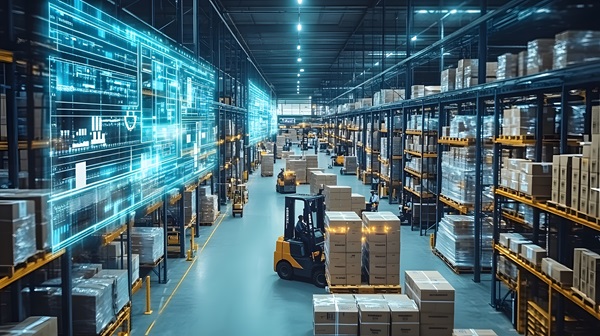
Smart manufacturing refers to the integration of AI, sensors, automation, cloud systems, and data analytics across industrial operations. While many of these tools have existed for years, their ability to work together in real time has advanced rapidly.
When used effectively, these systems can identify patterns, detect anomalies, and flag risks before an incident occurs. In safety-critical environments, that early warning can be the difference between intervention and injury.
Manufacturers are applying AI-driven tools in several specific ways to prevent injuries. These technologies are designed to identify risks that are easy to miss during a fast-moving shift.
- AI-Powered Security Cameras: Smart cameras monitor production floors for unsafe behavior such as missing protective equipment, aggressive conduct, or speeding forklifts. When unusual patterns appear, alerts allow supervisors to intervene rather than react after an injury occurs.
- Predictive Maintenance Systems: Machinery failures often lead to severe injuries. AI-based maintenance tools analyze performance data to predict breakdowns before they happen, reducing both downtime and the risk of catastrophic equipment failure.
- Environmental Smart Sensors: Sensors can detect hazards such as chemical exposure, smoke, excessive heat, or changes in air quality that may not be immediately visible to workers.
- AI Wearable Technology: Wearables monitor movement, posture, body temperature, and fatigue indicators. When abnormal patterns appear, supervisors can step in before repetitive strain, heat stress, or overexertion causes harm.
These tools aim to close safety gaps that traditional inspections and training cannot fully address. Their effectiveness depends on how consistently they are used and whether employers act on the warnings they receive.
Technology Doesn't Guarantee Safety
Even on New York job sites that use advanced safety technology, injuries still occur. AI does not eliminate production pressure, understaffing, mandatory overtime, or cost-cutting decisions that place workers at risk.
Under New York labor and workers’ compensation law, employers remain responsible for providing a reasonably safe workplace, regardless of whether smart systems or automated monitoring tools are in use. When an employer ignores safety alerts, fails to repair or maintain equipment, or allows dangerous conditions to continue, injuries remain preventable.
In New York City workplaces, digital safety logs, sensor data, maintenance records, and camera footage may later become evidence showing that hazards were known and not addressed. Technology can expose failures just as easily as it can prevent them.
For injured workers, the presence of AI or smart manufacturing systems does not change the right to medical treatment, wage replacement, and other workers’ compensation benefits under New York law.
Injuries caused by machinery, repetitive motion, falls, chemical exposure, or environmental hazards remain compensable even when no one is formally blamed and even when an employer points to technology as a safety measure.
Injured Workers Have Rights
AI may reduce some injuries over time, but it does not protect workers when systems fail, warnings are ignored, or safety policies are not enforced. When injuries occur, fault is not the deciding factor in whether a worker is protected.
Under New York law, most injured employees are entitled to workers’ compensation benefits regardless of who caused the accident. Medical care and wage replacement are available even when no one is blamed and even when an injury is described as unavoidable.
Many injured workers are also eligible to pursue more than a workers’ compensation claim. When a workplace injury is caused by a negligent contractor, equipment manufacturer, property owner, or another third party, a separate personal injury lawsuit may be available.
These third-party claims can provide compensation for pain and suffering and other losses that workers’ compensation does not cover. New technology on a job site does not eliminate these rights.
Contact a New York Workers' Compensation Lawyer Today
Pasternack Tilker Ziegler Walsh Stanton & Romano, LLP has represented injured New York workers for more than 90 years. We have recovered billions of dollars for injured workers and their families across New York. Our highly skilled legal team understands how workplace injuries occur, how employers and insurers defend claims, and how emerging technology affects modern work sites.
When injuries occur despite supposed safety measures, experienced legal guidance helps ensure workers receive the full range of benefits and compensation the law allows.
If you were injured while on the job in New York, contact us today for a free consultation to learn more about your case and learn how our workers' compensation lawyers can protect your rights.
"We are extremely grateful for the lawyers who helped my dad. They were professional, knowledgeable, and patient throughout the entire process. They took the time to explain everything clearly and truly cared about achieving the best outcome. Their support made a stressful situation much easier to handle. We highly recommend their services to anyone in need of reliable and compassionate legal help." - Jacqueline W., ⭐⭐⭐⭐⭐