
Head Injuries and Broken Bones From Workplace Ladder Falls
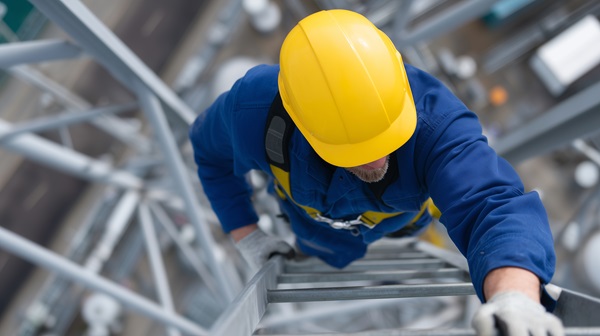
March is National Ladder Safety Month, a time to reflect on the risks workers face and the measures that can prevent injuries.
On the surface, a ladder looks simple enough. Two rails, a row of rungs, and a straightforward job to get done. But when something goes wrong at height, even a fall of six or eight feet can end a career and change a life. Ladder falls are among the most common work-related accidents in construction and general industry, and the injuries they leave behind, especially head injuries and fractures, are often more complicated than they first appear.
Workers and their families often feel blindsided when a minor fall turns into months of treatment, surgery, and uncertain recovery. Understanding the injuries, the safety rules intended to prevent them, and the legal options available, such as workers' compensation and third-party work injury claims, can help injured workers protect themselves.
Why do ladder falls cause such serious injuries?
Falls from ladders remain one of the leading causes of severe injuries and deaths in construction. According to OSHA, ladders are involved in roughly one-third of all fatal falls, most of which could have been prevented. The danger lies in how ladder falls occur and how the body absorbs impact forces. Examples include:
- Uncontrolled descent: Once a worker loses balance, there’s no way to slow or stabilize the fall.
- Instinctive reactions: Many people reflexively reach out to catch themselves, often resulting in broken wrists or forearm fractures.
- Feet-first landings: Those who land upright transmit crushing force through the ankles, knees, and spine.
- Side or head impacts: Falls ending on the side or head tend to cause the most catastrophic injuries, including traumatic brain or spinal damage.
Federal OSHA standards (29 CFR 1926.1053 for construction, 29 CFR 1910.23 for general industry) establish specific requirements for ladder safety. Extension ladders must be set at a 4:1 angle, meaning one foot out for every four feet of height. Ladders must be inspected before each use, secured at the top and bottom, and rated for the load they will carry. Employers are required to train workers on proper ladder use.
What kinds of head injuries happen in ladder falls?
Head injuries from ladder falls can range from mild to life-threatening, and symptoms aren’t always immediate. Workers may feel fine right after a fall but develop serious complications hours or days later. Here are common types of head injuries and why they’re often missed:
- Concussions: The most frequent head injury in workplace falls. Even when scans look normal, the brain’s chemistry can be disrupted, leading to headaches, confusion, sleep problems, or cognitive fog that appears days later.
- Skull fractures: Breaks in the skull can vary from minor cracks to serious fractures, often accompanied by swelling or bleeding around the brain.
- Epidural hematomas: Dangerous internal bleeding between the skull and brain. Victims may experience a brief lucid interval before symptoms rapidly worsen.
- Subdural hematomas: Slower internal bleeding that can be equally life-threatening, especially for older workers or those on blood thinners.
What broken bones are most common, and when do they become permanent disabilities?
The way a worker lands during a ladder fall often determines the type of fracture or injury they sustain. Certain patterns recur because of predictable physics and instinctive reactions during a fall.
- Wrist and forearm fractures: Often occur when workers instinctively reach out to break the fall, leading to Colles fractures that may need casting or surgical hardware.
- Ankle and foot fractures: Result from awkward landings or catching a foot on a rung mid-fall.
- Hip fractures: Especially severe for older workers, these often require surgery followed by long rehabilitation.
- Vertebral compression fractures: Caused when a feet-first landing forces pressure up through the legs and spine.
- Shoulder fractures or brachial plexus injuries: Occur from striking ladder rails or the ground during descent.
How do workers' comp and third-party claims work after a ladder fall?
In New York, ladder falls on construction sites may also involve liability under Labor Law §240, often called the “Scaffold Law,” which holds contractors and property owners responsible when proper fall protection is not provided.
Workers' compensation covers medical costs and partial wage replacement on a no-fault basis, which means a worker doesn't need to prove the employer was negligent to receive benefits. But workers' comp has real limitations. It doesn't compensate for pain and suffering, and insurance companies will often challenge the severity of the injury through their own independent medical examinations.
What many injured workers don't realize is that a separate, third-party claim may also be available. If a defective ladder caused or contributed to the fall, the manufacturer can face a product liability claim. If the worker was employed by a subcontractor and the general contractor created the unsafe conditions, the GC may be liable. Property owners can sometimes be held responsible as well. A third-party claim, unlike workers' comp, can include full damages for pain and suffering.
A Construction Site Injury Can Derail Your Life. The Right Legal Team Can Help You Rebuild It.
A construction site injury doesn't clock out when your shift ends. The pain follows you home, the medical bills accumulate on the kitchen table, and the question of how you'll support your family starts to overshadow everything else.
Pasternack Tilker Ziegler Walsh Stanton & Romano LLP has spent over 90 years representing the people who build this city. We understand that what you need right now isn't just legal advice, it's a team that will fight as hard for your recovery as you've worked your entire career.
We represent injured construction workers throughout New York City, including Manhattan, Brooklyn, the Bronx, Queens, and Staten Island. We also go as far as Long Island, Westchester, Rockland County, and communities across upstate New York.
Since we work on a contingency fee basis, there are no up-front costs, and you pay nothing unless we win your case. If you were hurt on a New York construction site, contact us today to schedule your free, confidential case evaluation.
“Amazing experience and what a great team. Everything I needed was resolved, so I highly recommend them. Also, Petroula was so helpful and professional. She answered all my questions, and she kept on checking in, which made me feel confident about how my case was moving forward.” - V.N., ⭐⭐⭐⭐⭐