
OSHA Names Top 10 Workplace Safety Violations for 2025
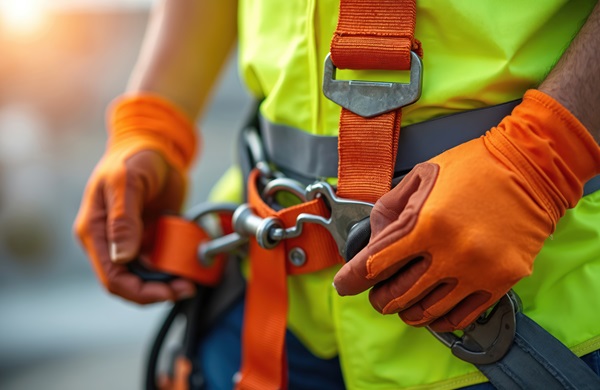
Every year, the Occupational Safety and Health Administration (OSHA) releases its list of the most frequently cited workplace safety violations. And every year, the same issues keep popping up. For the 15th year in a row, "Fall Protection – General Requirements" tops the list, proving that even with increased awareness, some risks won’t go away.
The latest data, shared at the 2025 National Safety Council (NSC) Safety Congress & Expo, isn’t just a list of numbers. It’s a reminder that too many workers are still exposed to preventable hazards. So, what’s really going on in workplaces across the country? What can employers and safety professionals do to turn these trends around? Here's what you need to know.
Why does fall protection keep landing at #1?
With 5,914 violations in 2025, fall protection isn’t just a persistent problem; it’s an epidemic. Year after year, employers fail to provide proper guardrails, safety nets, or personal fall arrest systems, leaving workers vulnerable to serious injuries or worse. What’s more, "Fall Protection – Training Requirements" also made the top 10, meaning workers aren’t just lacking equipment; they’re lacking the knowledge to use it safely.
Falls don’t just happen on construction sites, either. Warehouses, manufacturing plants, and even office buildings with elevated work areas can be danger zones. The question isn’t why fall protection keeps ranking first; it’s when will companies finally make it a priority?
What are the other biggest workplace safety risks?
The rest of OSHA’s top 10 list includes many familiar workplace hazards, many of which have been on this list for years. Here are the biggest workplace safety risks and violations:
Hazard Communication (1910.1200): 2,546 violations
Workers have a right to know about the chemicals they’re exposed to, including both immediate dangers and long-term health risks. Yet too many employers still skip proper labeling, safety data sheets, and training, leaving employees uninformed and unprotected.
Ladders (1926.1053): 2,405 violations
Something as simple as a ladder can become deadly if it’s damaged, improperly placed, or used by someone who hasn’t been trained. Even a minor misstep can lead to ladder accidents that cause serious injuries or fatalities.
Lockout/Tagout (1910.147): 2,177 violations
Failing to control hazardous energy during maintenance or repairs can be fatal, turning routine tasks into life-threatening situations. Yet, this standard is ignored far too often, often due to pressure to keep production moving.
Respiratory Protection (1910.134): 1,953 violations
From dust to toxic fumes, respiratory hazards are everywhere, but so are excuses for not providing proper masks, fit-testing, or training. Without the right protection, workers risk chronic lung diseases or acute respiratory failure.
Scaffolding (1926.451): 1,905 violations
Unstable or improperly assembled scaffolding is a disaster waiting to happen, especially when overloaded or exposed to harsh weather. Collapses can injure or kill multiple workers at once.
Powered Industrial Trucks (1910.178): 1,826 violations
Forklifts and other industrial trucks cause thousands of injuries every year, often due to poor training, speeding, or operators with obstructed views. Pedestrians in the workplace are especially vulnerable.
Eye and Face Protection (1926.102): 1,665 violations
It only takes a second for debris, chemicals, or flying particles to cause permanent damage—but too many workers still aren’t given (or don’t wear) the right protection. Even minor eye injuries can lead to vision loss or costly medical treatment.
Machine Guarding (1910.212): 1,239 violations
Unguarded machinery can crush, amputate, or worse in an instant, making it one of the most gruesome hazards in any workplace. Yet, this violation remains stubbornly common, often due to outdated equipment or ignored safety protocols.
What do these numbers tell us about workplace safety?
Lorraine Martin, CEO of the National Safety Council, put it bluntly: “The consistency in citation rankings year after year signals there is more work ahead.” In other words, we’re not making enough progress.
The same violations keep appearing because the same mistakes keep happening. Employers cut corners on training. Safety programs get treated as checkboxes instead of lifesavers.
However, the data also shows that improvements can be made when employers focus their efforts on better training, stronger leadership accountability, and a real commitment to identifying and controlling hazards before someone gets hurt.
Knowing the top violations is one thing; doing something about them is another. Here’s what employers can do to help prevent serious injuries and fatalities caused by falls:
- Invest in training (and not just once a year): Workers need regular, hands-on safety refresher courses, especially in high-risk areas like fall protection and lockout/tagout.
- Make safety part of the culture: When leaders prioritize safety by walking the floor, listening to concerns, and enforcing rules, workers follow suit.
- Use technology to track hazards: From wearables that monitor falls to digital checklists for equipment inspections, tools exist to catch problems before OSHA does.
- Engage workers in safety decisions: The people doing the job often know the risks best. Ask for their input and act on it.
Injured on the job in New York? Get a lawyer who will fight for what you deserve.
If you were hurt on the job in New York, let Pasternack Tilker Ziegler Walsh Stanton & Romano LLP take it from here. For over 90 years, we’ve gone toe-to-toe with insurance companies, employers, and even the Workers’ Compensation Board to make sure injured New Yorkers like you get the medical care, lost wages, and long-term support they deserve.
Whether you’re in New York City, Long Island, the Hudson Valley, or Upstate, we’ve got offices near you and a track record of winning for injured workers in every borough and beyond. Contact us today to schedule your free, confidential consultation.
“I had to use them on 4 different occasions (cases) and they never disappointed me. Very professional and reliable. Highly recommend.” - M.T., ⭐⭐⭐⭐⭐